
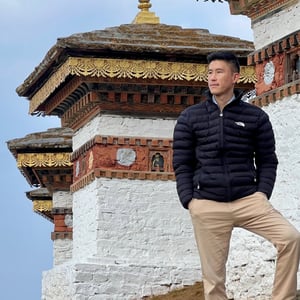
I've been guiding in Bhutan since 2015, and if there's one thing the mountains have taught me, it's patience. I started because I couldn't say no to travel. Exploring has always been my first love. So, when tourism gave me a reason to walk, it felt like the sweetest job in the world.
From the eastern valleys of Trashigang to the western passes near Haa, from the northern borders at Lunana to the southern foothills — I've walked most of Bhutan. East to west, north to south. And every trail taught me something new.
But my heart belongs to the Snowman Trek.
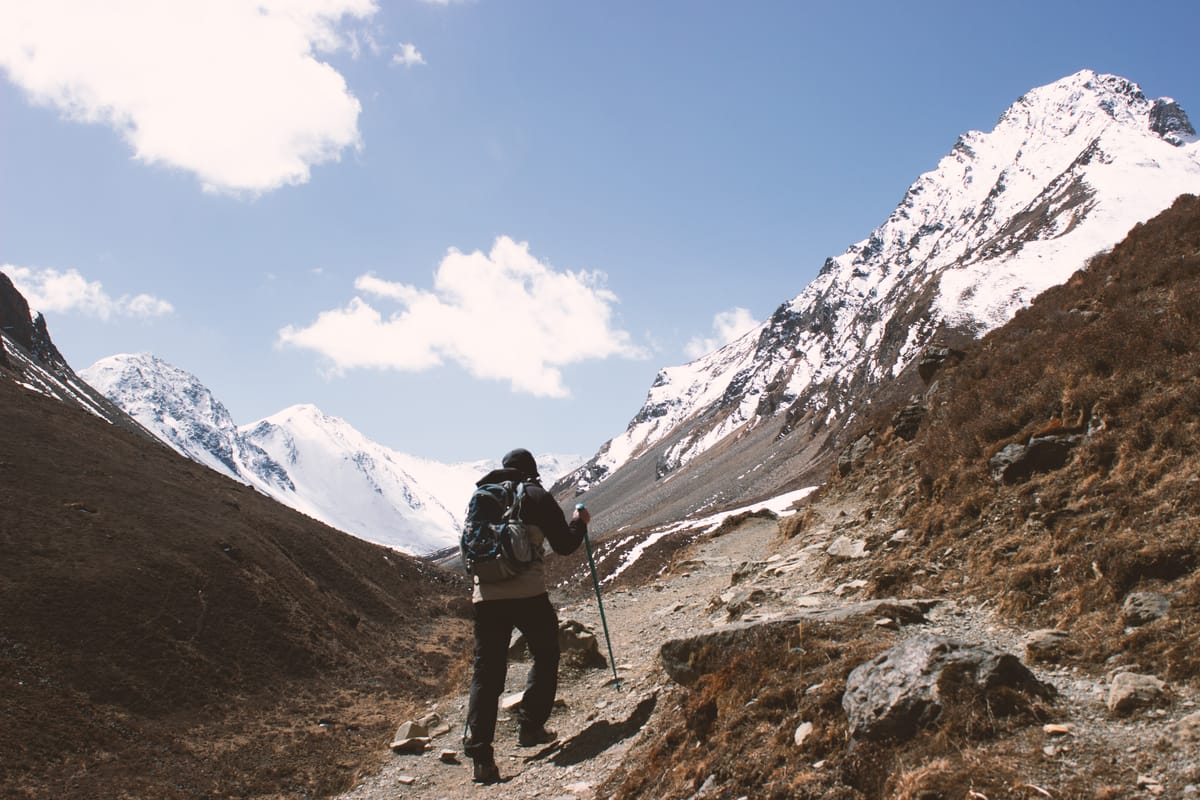
It's the hardest trek in Bhutan. Some even call it one of the hardest in the world. I'm honest with my guests: it's not like summiting Everest. But it will test you. Physically, when your legs shake above 5,000 metres. Mentally, when the days stretch long and cold. Emotionally, when you miss home. And spiritually, when you stand alone under a sky full of stars with nothing but prayer flags fluttering beside you.
"Up there, time collapses. You walk through the past in ancient yak-herder trails, live fully in the present with every breath of thin air, and glimpse the future in the strength you didn't know you had."
On that trail, I've seen everything. I've seen grown men grin through blisters and altitude. I've also seen quiet tears — silent, steady — because the body was tired but the spirit didn't want to quit. When words fail, all I can do is walk beside them, encourage, and sometimes just offer a hug. That hug says: "You're not alone up here."
People often say, "Bhutan is expensive." And I tell them: you're not just paying for a trip. You're investing in a nation. Every ngultrum helps protect forests, preserve culture, and build schools. You leave with memories that don't fade. You leave Bhutan better than you found it.
And to anyone dreaming of the Snowman Trek — I'll say this, friend: Bhutan isn't just a destination. Bhutan is the Pearl of the Himalaya.