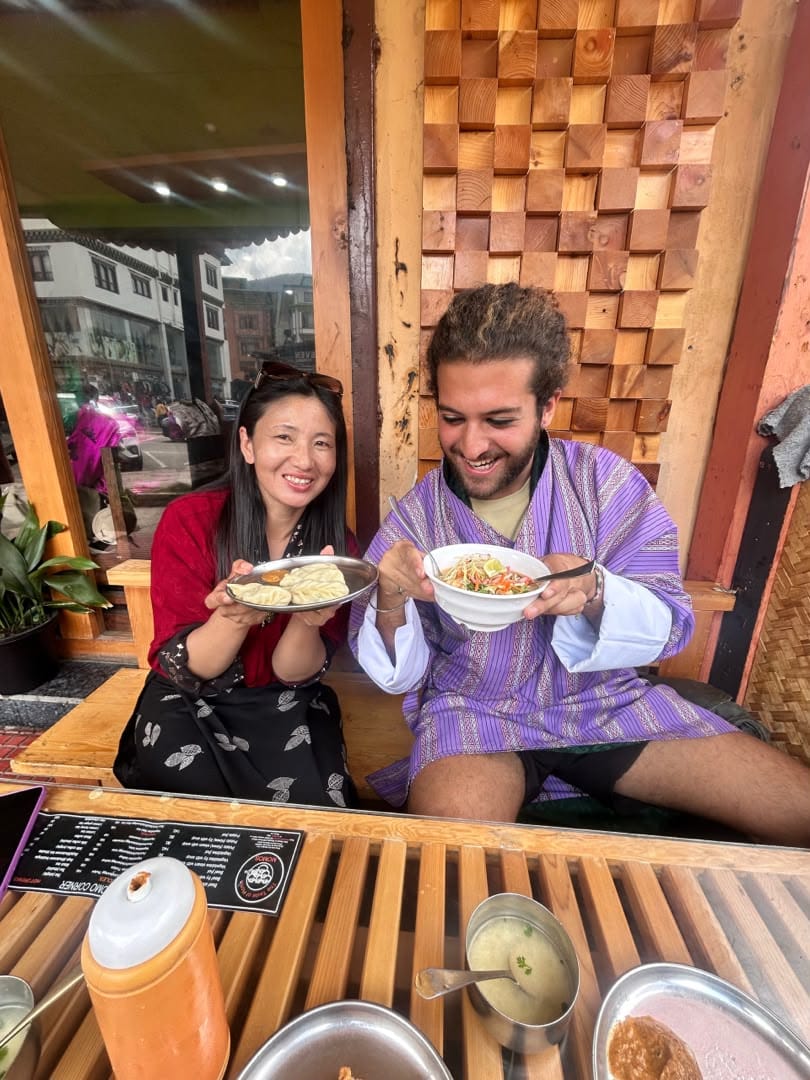
Bhutanese food is unlike anything you will find anywhere else. It is simple, honest, deeply spiced — and almost always built around two ingredients that define the national palate: chilli and cheese. If you are not a fan of heat, you will need to communicate that clearly. If you love spicy food, you may have found your paradise.
Meals in Bhutan are served with red rice — a nutty, slightly chewy grain grown in the Paro and Punakha valleys. It is more nutritious than white rice and has a particular earthiness that you will come to associate with the country long after you leave.
Must-Try Bhutanese Dishes
Bhutanese food is genuinely spicy — not Indian-spicy or Thai-spicy, but its own kind of heat from fresh and dried Bhutanese chilies. If you have a low tolerance, say "ema migo bay" (less chilli please) or ask your guide to request "less spicy" on your behalf. Most restaurants that cater to tourists are used to adjusting. If you say nothing, assume full heat. And if you loved the meal, tell them — "namey samey zhim mae" means "it is very delicious" and it will put a big smile on any Bhutanese cook's face.
What is Included in Your Tour Meals
If you are on a tour package, breakfast and dinner are typically included at your hotel. Lunch is usually arranged at a local restaurant chosen by your guide, often a Bhutanese family-run place where you eat what the kitchen is cooking that day. These impromptu meals are often the most memorable ones.
A standard tour lunch spread usually includes red rice, ema datsi or kewa datsi, a meat dish, a vegetable side, and sometimes soup. It is a full meal and very filling.
Vegetarian and Dietary Requirements
Bhutan is surprisingly accommodating for vegetarians. Because Bhutanese Buddhist culture does not always place meat at the centre of a meal, many traditional dishes are naturally vegetarian — ema datsi, kewa datsi, nakey and several others. Most restaurants can prepare vegetarian versions of dishes on request.
Vegans will have a harder time — datsi (cheese) and butter appear in many dishes. Communicate your requirements clearly to your guide before the trip, and they can arrange appropriate meals throughout.
For severe food allergies, inform your tour operator in advance. Kitchens in smaller towns or farmhouses may not always be able to accommodate complex dietary restrictions, so planning ahead matters.
Local Drinks
Butter Tea (Suja)
Suja is Bhutan's traditional hot drink — black tea churned with yak butter and salt. It tastes nothing like what most visitors expect from "tea." It is rich, salty and slightly oily. It is an acquired taste, but it is everywhere, and refusing it when offered in a home or monastery is considered impolite. Take a sip and appreciate the gesture.
Sweet Milk Tea
The more familiar option — black tea brewed with milk and sugar. Widely available and served at most restaurants and roadside stops. A good choice if suja is not for you.
Ara
Ara is Bhutan's traditional locally brewed spirit, made from rice, wheat, barley or millet. It can be served warm or cold. Strength and quality vary enormously depending on where it is made. It is often offered at farmhouse stays and festivals. Approach with care — a strong local batch can be surprisingly potent.
Restaurants Worth Knowing
Thimphu
Thimphu has the widest range of dining options — from traditional Bhutanese restaurants to Indian, Chinese, continental and even pizza. The restaurant scene has grown significantly in recent years and quality has improved across the board. Norzin Lam (the main street) and the area around the clock tower have the highest concentration of restaurants.
Paro
Paro town has several good restaurants near the main street and along the road towards the dzong. Options are more limited than Thimphu but quality is solid. Hotel restaurants in Paro tend to be reliable.
Punakha
Punakha has fewer standalone restaurants. Most eating happens at hotels or guesthouses. The food is good — the valley's warm climate means locally grown produce is fresh and abundant.
Bumthang
Bumthang is known for its Swiss cheese and red wheat products — a legacy of Swiss development projects in the region decades ago. Local bakeries sell yak cheese, jam and fresh bread. The Bumthang brewery also produces Red Panda Beer — one of Bhutan's few locally brewed beers and well worth trying if you are passing through.
It is customary to wait until everyone is served before eating. Finishing everything on your plate is a sign of appreciation. If eating in a Bhutanese home, you may be served more rice than you expect — do your best to finish what is on your plate. Wasting food is considered disrespectful in Bhutanese culture, so take only what you can eat. Eating with your right hand is traditional, though cutlery is always available.
Bhutanese food is not glamorous or delicate. It is robust, warming and built for a high-altitude life. Once you get past the chilli, you may find yourself craving ema datsi long after you get home. Most of my guests do.